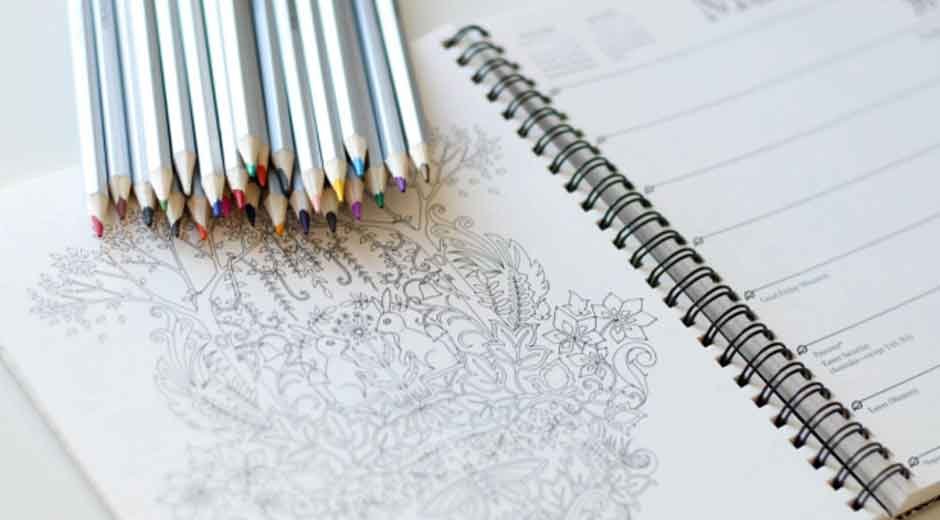
Want to relieve stress and anxiety but don’t have the budget for an expensive therapist?
Guess what? You may be surprised to know that the solution to this problem is closer than you think. It may be as easy as a visit to the bookstore right now.
Adult coloring pages have experienced an unexpected resurgence in the past decade. But there’s a good reason for why millions of people have taken to this practice to work through the stress and anxiety in their lives.
Whether you visit a bookstore or find Spiderman printable sheets and other designs online, there are countless options available for families and individuals looking to explore this therapeutic practice.
With the promise of stress and anxiety relief, adult coloring has transformed from a simple way to pass the time into one of the most effective – and least expensive – anxiety-relief practices.
Let’s look at the details:
What started out as a simple activity that helped adults pass the time has now become one of the most accessible stress relief techniques.
And best of all? You don’t need to be an artist.
What you will learn:
- The Science Behind Adult Coloring Therapy
- How Coloring Pages Help to Reduce Anxiety and Stress
- The Mindfulness Connection
- Different Types of Therapeutic Coloring
- Making Coloring Part of Your Wellness Routine
The Science Behind Adult Coloring Therapy
Wait for it…
Scientists and researchers have long been studying the potential mental health benefits of adult coloring pages. And the findings are pretty remarkable.
By just coloring, the human brain enters into a “state of mindfulness,” much like one does in formal meditation.
Research shows that in 2 hours, coloring can provide a clinically significant reduction in anxiety in adults.
Participants in an emergency department study who received adult coloring books had lower self-reported anxiety than those in the control group.
But wait, there’s more…
How is this achieved, you ask?
“Simple.” The frontal lobe gets activated (in charge of organizing things and problem-solving), while your mind concentrates on the present (the choice of colors, remaining in the lines, and similar repetitive movements).
“The results are what Dr. Stan Rodski, a neuropsychologist, described as “a relaxing mindset,” research published in the journal Frontiers in Psychology showed.
Utilizing a kind of mind-reading technology called electroencephalogram (EEG) to record his patients’ brainwaves while coloring, Dr. Rodski found measurable improvements in heart rate and changes to their brainwaves.
Unbelievable, right?
How Coloring Reduces Anxiety and Stress
Okay, but why is coloring such a good way to achieve this goal?
It all boils down to three mechanisms that kick in immediately when one starts to do so:
Attention.
When one is preoccupied with choosing the right color and remaining within the lines, they have no time to focus on their to-do list or whatever else is on their mind that is causing them stress.
Relaxation response.
Research involving 120 older adults that compared 20 minutes of mandala coloring with listening to relaxing music showed that coloring activity, in particular, is effective in significantly reducing anxiety levels.
Results revealed that participants perceived mandala coloring as helping them to “feel calmed down, safe, at ease and satisfied.”
Quiet your nervous system.
Research has also found that coloring leads to a significant reduction in one’s heart rate and blood pressure, as well as lowering cortisol levels, which indicates the body is moving out of the stress response.
The statistics don’t lie, either: in a clinical trial with people living with generalized anxiety disorder, patients who combined coloring books and standard treatment experienced significantly better results than those who received standard treatment alone.
The Mindfulness Connection
It’s where things get really interesting…
Completing coloring sheets is a natural and simple way to build mindfulness without having to meditate for hours. When one is concentrating on staying within the lines or picking the right shade of blue, that is, in fact, being present and mindful.
That is precisely what mindfulness is.
One of the challenges of meditation is dealing with so-called “monkey mind” – the mind that jumps all over the place and makes it difficult to concentrate.
Coloring offers the meditator something to focus on – the simple act of coloring – as well as mental focus and concentration. It’s like putting on training wheels as you learn mindfulness – still mindfulness but without the pain.
Families often report that coloring with their children is like a joint mindfulness activity that allows everyone to slow down and take a moment for themselves.
“The Mayo Clinic explains that the sort of concentrated attention cultivated while coloring helps to “shut off the noise around you,” and “gives your mind a gift of focusing on the movements, sensations, and emotions of the present moment.”
Different Types of Therapeutic Coloring
Are all coloring pages not made equal, though?
Truth be told, here’s what the research shows to work best:
Mandala Coloring
Mandala shapes appear to have the strongest effect in clinical studies of reducing anxiety.
This is hardly surprising since the very word mandala means “healing circle,” and their circular, symmetrical designs seem naturally relaxing.
In fact, research found that simply coloring complex mandala images for 30 minutes was enough to produce a reduction in anxiety scores of 14.92 points, which is considered a clinically significant improvement.
Complex Geometric Patterns
Busy, detailed shapes require a greater level of concentration, which multiplies the meditative benefits. The repetitive nature also quiets the mind.
Nature Scenes
Botanical illustrations offer the benefits of nature combined with the stress-relieving effects of coloring.
Abstract Designs
Abstract coloring pages provide creative freedom with the structure required to produce the anxiety-relieving benefits.
Making Coloring Part of Your Wellness Routine
Want to really harness the healing power of coloring? Let’s face it. You can, of course, color for fun or just to kill some time, but if one wants to get the real therapeutic benefit from the practice, one must be systematic about it.
That being said, let’s look at a few tips:
Begin by carving out just 10-20 minutes. You do not need to dedicate hours to see the positive effects of the practice.
Pick the right time of day.
The best time for coloring is, in many ways, a personal preference, but a lot of people find coloring in the evening, especially before bed, to be especially beneficial since it also allows them to unplug from electronics.
Create a space.
Set a corner of a room in your home, ideally with lots of good light, and some cushions. Have all your coloring books, pencils and other favorite supplies close at hand.
Don’t strive for perfection.
One of the most effective parts of coloring is the fact that it’s not about the finished product.
Experiment with different media.
Colored pencils, markers, gel pens, and watercolor pencils all provide different experiences and sensations.
Bottom Line
Adult coloring therapy is much more than just a trip down memory lane and a fun way to pass the time, it is a scientifically proven method to significantly reduce anxiety and boost mental health.
Studies show that coloring regularly leads to a measurable decrease in stress hormones, anxiety symptoms, and has a calming effect on the human nervous system, putting the body and mind into a meditative state. It also is unlike a number of other wellness fads in that it’s both accessible and affordable and does not require any special training or expertise.
In Summary
Adult coloring therapy is an easy and highly effective way to manage stress and anxiety in a world that seems to spin faster every day.
With clinically significant reductions in anxiety reported in multiple studies, it’s no wonder why adults are returning to coloring books in record numbers.
Whether you prefer intricate mandalas, nature illustrations, or abstract shapes, the important thing is that you color regularly. Just 10-20 minutes of coloring a few times per week is all it takes to begin the calming process and switch the nervous system to a more restful state, and the best part is that one can give it a try at any time for free since it’s easy to access free coloring pages online.