Why Wallpaper Choices Need to Stand the Test of Time
Wallpaper has quietly worked its way back into interior design over the past several years, valued for the texture, pattern, and personality it lends a room in ways paint just can’t match. But unlike slapping on a fresh coat of color, wallpaper is a real commitment—it takes time, money, and effort to install, and often even more to remove down the line. That permanence is exactly why choosing wisely matters so much. Plenty of homeowners spend weeks digging through research before committing to anything, sometimes stumbling onto candid discussions like the one about serena wallpaper, where people share how a specific collection actually performs during installation and years down the road. These conversations are worth reading not because any single product holds “the answer,” but because they show how real people experience pattern, texture, and durability well after the showroom visit fades from memory. This article isn’t about pushing any particular brand—it’s about walking through the qualities that make wallpaper feel right for years, not just for a season.
Understanding What Makes Wallpaper “Timeless”
Timeless wallpaper is design that keeps feeling appropriate even as furniture, trends, and personal tastes shift around it. The line between timeless and trendy often comes down to specificity: a classic pattern like a subtle stripe, muted botanical, or restrained geometric tends to play well with many decor styles, while highly novel motifs or extreme color contrasts risk looking dated within just a few years.
Architecture and room function shape what reads as timeless, too. Traditional homes with detailed trim and moldings often pair naturally with heritage motifs like damasks or soft florals, while modern spaces with clean lines tend to suit simple geometrics or textured, low-contrast papers. Designers frequently point to balance, proportion, and scale—principles that apply just as much to wallpaper as they do to furniture arrangement—when recommending patterns meant to last.
Considering Color: Palettes That Age Well
Color is usually the first filter for a lasting choice. Bold, saturated hues can be striking at first but may start to feel overwhelming after a few years of daily exposure. Neutral and muted palettes—soft whites, warm grays, taupes, gentle blues, desaturated greens—tend to adapt more gracefully as furniture and textiles change around them.
Light plays a major role too. Lighter wallpapers can help small or dim rooms feel more open, while medium tones add coziness without dating quickly. One practical method worth trying: tape up large samples and watch them at different times of day, since natural and artificial light can shift a color’s character more than you’d expect.
Key Takeaway: A homeowner who chose a deep, saturated accent wall might love it at first, only to find it clashes once new furniture enters the picture. Testing color under multiple lighting conditions—and being honest about your own tolerance for boldness—helps avoid this kind of regret.
Pattern and Scale: Matching Design to Room Size and Use
Pattern type (stripes, florals, geometrics) and pattern scale (small, medium, large repeats) both play into longevity. Small-scale patterns often read as texture from a distance, which makes them forgiving in compact rooms. Medium-scale patterns suit most living areas and hallways, while large-scale designs can be dramatic but demand more commitment and tend to feel dated sooner than the rest.
A quick guide by room type:
- Entryways and hallways:small-to-medium patterns that disguise minor scuffs
- Bedrooms:soft, calming patterns in low-to-medium scale
- Living rooms:medium-scale patterns or a single feature wall for impact without overwhelming the space
Using pattern strategically—on one wall, a ceiling, or a nook—lets you enjoy a bolder design without letting it take over daily life.
Texture and Material: Beyond Just the Printed Design
Wallpaper’s longevity isn’t only about the print—material and texture matter just as much. Standard paper is affordable but less durable; vinyl or vinyl-coated options are easier to clean and generally better suited to high-traffic or moisture-prone rooms. Textured wallpapers, like grasscloth or fabric-backed styles, add depth and sophistication but can be trickier to maintain.
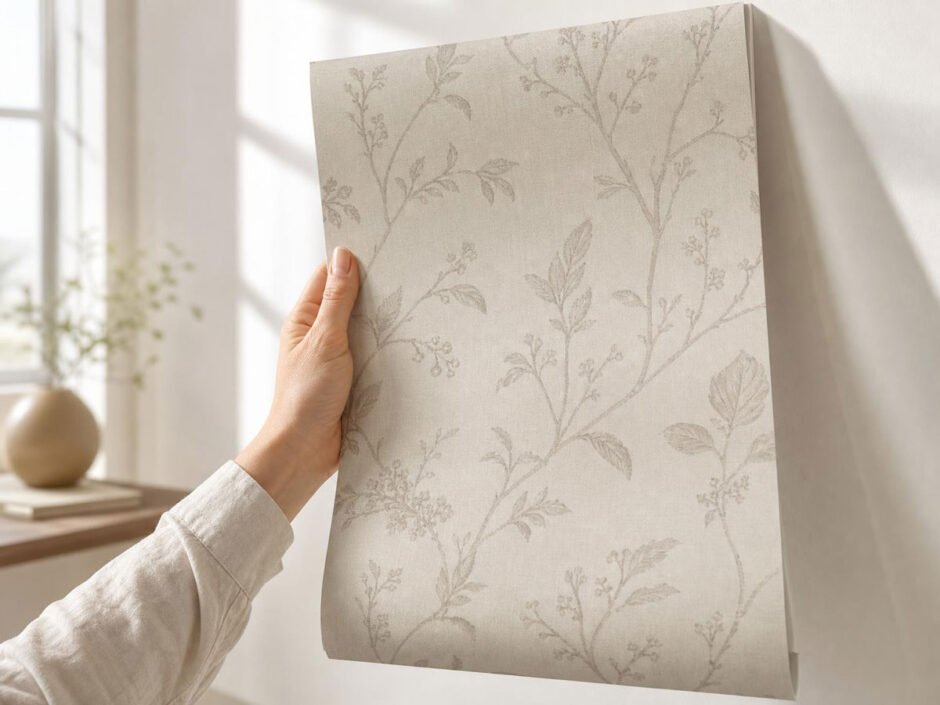
Subtle woven or linen-like textures often read as a quiet backdrop rather than a bold statement, which supports timelessness in a room. Terms like non-woven, pre-pasted, and peel-and-stick describe installation methods worth understanding before you buy—always check manufacturer specifications for washability and suitability in your intended room.
Practical Planning: Sampling, Testing, and Preparing Surfaces
Before committing, order large samples or roll-downs rather than relying on tiny swatches. Tape them to multiple walls and live with them for several days to see if the appeal holds once the novelty wears off.
Surface preparation matters just as much as the design itself. Smooth, clean walls and the right primers support proper adhesion and make removal easier later on. One common misstep: skipping primer, which can turn future removal into a frustrating job and damage the wall underneath.
Before you commit, consider:
- Order full-size samples, not just swatches
- Observe them in morning and evening light
- Prepare and prime walls properly
- Review installation instructions for your specific product
Real-World Scenarios: Matching Wallpaper Choices to Common Home Situations
A small entryway benefits from a subtle, small-scale pattern that adds character without visual clutter. An open-plan living and dining area, visible from multiple angles, often calls for a versatile neutral or textured paper that coordinates with varied sightlines. A child’s room might use a playful but simple pattern in removable or repositionable material, allowing for easy updates as tastes change.
How to Balance Personal Style with Long-Term Flexibility
Timeless doesn’t mean boring—personal taste still matters. Consider reserving primary living spaces for adaptable, neutral choices while treating smaller areas like powder rooms or closets as spaces to experiment with bolder patterns.
Timeless doesn’t mean trendless; it means you’ll still love it years from now. The goal is finding a “quiet backdrop” for most of the home, with occasional focal accents where personality can shine through.
Designing Walls That Grow with You
Choosing wallpaper that lasts comes down to a handful of core considerations: balanced color, appropriate pattern and scale, suitable texture and material, and thorough testing and preparation. Thoughtful choices in each of these areas help a home feel cohesive and inviting for years, not just months.
Start small—gather inspiration, order samples, and see how different options feel in your own light and space. Consulting professional designers, experienced installers, or neutral user discussions can offer valuable perspective, helping you make an informed decision grounded in real experience rather than passing trends.