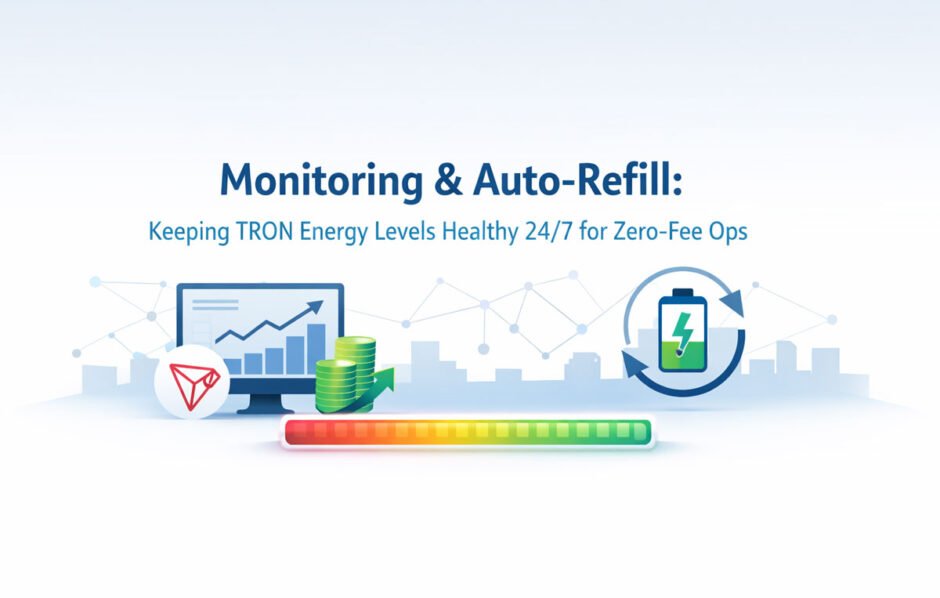
 In the TRON ecosystem, energy is more than a technical resource; it is a direct factor in whether transactions stay efficient, predictable, and cost-effective. For businesses and high-volume users looking at practical approaches to this challenge, platforms such as https://tronxenergy.com/ show how monitoring and auto-refill can help maintain stable energy availability around the clock. When energy levels are managed properly, teams can support zero-fee operations without constant manual intervention.
Why TRON Energy Matters for Operational Stability
TRON uses a resource model in which energy is consumed when smart contracts are executed. If there is not enough energy available, the system may instead burn TRX to complete the transaction. For companies processing transfers, handling user withdrawals, running payment flows, or supporting automated Web3 actions, that can create unnecessary and unpredictable costs.
This is why energy management is not just a wallet issue. It is an operational issue. A healthy TRON setup requires enough energy to cover normal demand, absorb sudden spikes, and prevent the kind of shortages that force teams into reactive spending. The difference between a well-monitored resource pool and a neglected one is often the difference between smooth execution and constant firefighting.
The Real Problem with Manual Energy Management
At low transaction volume, manual top-ups may seem manageable. A team member checks balances, estimates usage, and refills resources when levels fall too far. But that approach becomes fragile as soon as transaction frequency increases or operations move across time zones.
The most common failure is simple: nobody notices the drop in time. Energy levels may look fine during normal business hours, then fall overnight, during weekends, or during periods of unusual contract activity. By the time someone reacts, some transactions have already become more expensive than planned.
Manual processes also introduce a second problem: overcorrection. In an effort to avoid shortages, teams often over-allocate resources and lock up more capital than necessary. That may reduce risk in the short term, but it lowers capital efficiency and makes scaling less flexible.
What Continuous Monitoring Actually Solves
Continuous monitoring gives operators real-time visibility into energy consumption patterns, wallet status, and refill timing. Instead of checking only when there is a suspected issue, teams can track the health of their TRON resources as an ongoing operational metric.
That visibility supports better decisions in three ways. First, it helps detect early warning signs before a shortage affects live transactions. Second, it makes consumption trends easier to forecast, which improves budgeting and capacity planning. Third, it reduces dependence on individual team members who might otherwise become the single point of control for resource management.
Monitoring becomes especially important for businesses that handle recurring transaction waves. Exchanges, payment providers, gaming projects, and DeFi-related services often experience usage peaks that are not evenly distributed. Without tracking those patterns, energy planning tends to lag behind reality.
How Auto-Refill Turns Monitoring into Action
Monitoring alone is useful, but it does not eliminate the gap between detection and response. That is where auto-refill becomes critical. Once predefined thresholds are set, the system can replenish energy automatically when balances approach unsafe levels.
This transforms energy management from a reactive task into a proactive control layer. Instead of waiting for operators to log in, approve a refill, and confirm execution, the replenishment happens as part of the workflow itself. The result is continuity. Transactions keep moving, service levels remain stable, and the chance of accidental TRX burn is reduced.
Auto-refill is particularly valuable for 24/7 environments because blockchain activity never stops. Smart contract interactions do not pause when a finance team is offline. An automated refill mechanism closes that operational gap and aligns resource availability with the nonstop nature of the network.
Building a Healthy 24/7 Energy Strategy
A healthy TRON energy strategy is not about keeping balances as high as possible. It is about keeping them in the right range at the right time. That requires a combination of baseline planning, real-time monitoring, and threshold-based automation.
The first layer is understanding normal consumption. Teams need a realistic view of how much energy is used during standard activity, as well as what happens during peak periods. The second layer is defining minimum safe levels. Those thresholds should leave enough room for temporary spikes rather than triggering action only after risk has already become visible. The third layer is automated replenishment that matches operational priorities, wallet structure, and transaction timing.
When these layers work together, energy management becomes more predictable. Costs are easier to control, service interruptions become less likely, and operators gain a clearer picture of how resource usage affects the broader business model.
The Role of Alerts and Human Oversight
Automation does not remove the need for oversight. It improves the first line of response, but human review still matters for trend analysis, policy adjustments, and exception handling. Alerts should notify teams when refill events become unusually frequent, when usage changes sharply, or when thresholds no longer fit actual demand.
That balance is important. The best systems are not fully manual or blindly automated. They are observable, configurable, and designed to let people intervene only when intervention adds value.
Zero-Fee Ops Depend on Consistency, Not Luck
The goal of zero-fee operations on TRON is attractive, but it cannot depend on perfect timing or constant employee attention. It requires a system that keeps energy available even when demand shifts unexpectedly. Monitoring provides visibility, while auto-refill provides continuity. Together, they create the conditions for cost-efficient execution without operational stress.
For any project that relies on frequent TRON transactions, healthy energy levels are not a minor optimization. They are part of the infrastructure. A 24/7 approach to monitoring and refill helps turn resource management from a recurring risk into a controlled, dependable process—and that is what makes zero-fee operations sustainable over time.