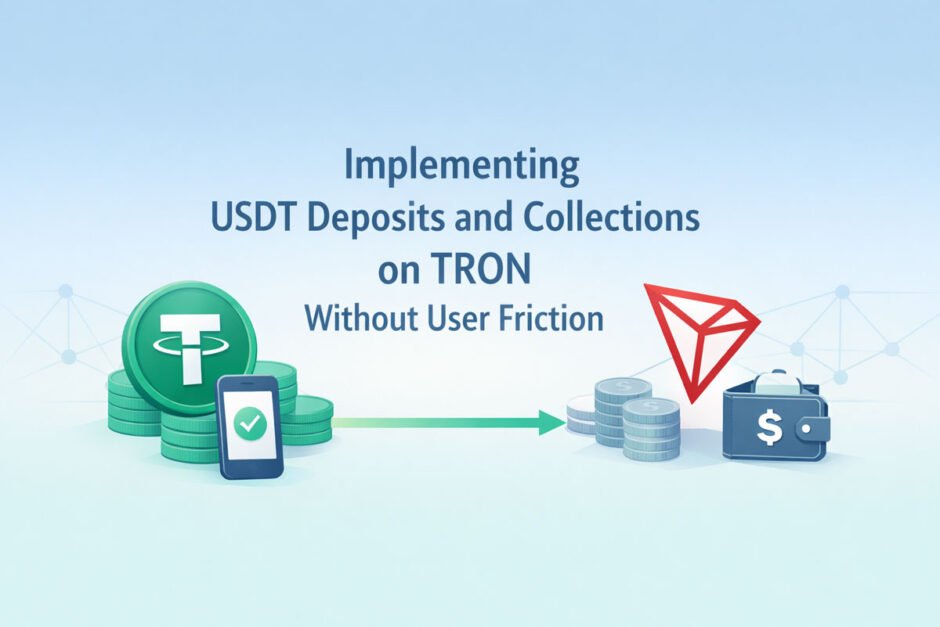
A smooth TRON deposit experience should feel as simple as a card payment: the user sends USDT once, sees it credited quickly, and never has to learn what “energy,” “bandwidth,” or “gas” means. The tricky part is that TRC-20 USDT transfers involve smart contract execution, which introduces resource requirements that can silently break collections if you don’t plan for them. To keep the flow invisible to users, many operators proactively manage resources—for example, by sourcing energy on demand through services such as buy tron energy so sweeps don’t stall when a deposit address can’t afford execution.
What “no friction” really means on TRON
On TRON, a deposit is not the same thing as a successful treasury collection. Users care that their balance updates; you care that funds reliably move from many deposit addresses into a controlled treasury wallet. Friction usually appears when these two realities drift apart—when the chain shows the deposit, but your system can’t sweep it, delays crediting, or asks the user to send TRX “for fees.”
A truly low-friction implementation typically achieves:
- One-step user action: send USDT to a deposit address.
- Predictable crediting: your platform credits according to a clear confirmation policy.
- Reliable collections: funds are swept to treasury automatically without user intervention.
- No surprise requirements: no “please also send TRX” messages.
Choose a deposit model that won’t create support tickets
Most teams end up with one of these patterns:
1) Unique deposit address per user (or per invoice).
This is the cleanest operationally for attribution and reconciliation. Every incoming transfer maps to one owner. The tradeoff is you now have many addresses that may need resources to perform outbound sweeps.
2) Shared address with off-chain attribution.
This can reduce the number of collection transactions, but it increases attribution complexity and user error risk (especially when deposits come from exchanges or wallets that don’t reliably support memos/tags).
If your priority is “no friction,” unique addresses are usually worth the backend effort.
Why collections fail: TRC-20 USDT needs execution resources
A plain TRX transfer is simple; a TRC-20 USDT transfer is a smart contract call. That call consumes energy (and bandwidth). When you attempt to sweep USDT from a deposit address to treasury, the transaction can fail or be rejected if the sender lacks sufficient resources (or TRX to cover fees).
This is the moment many products unintentionally create friction by telling the user: “Send a bit of TRX so we can move your USDT.” Avoid that by treating resources as part of your infrastructure, not the user’s responsibility.
A practical architecture: detect → confirm → credit → sweep → settle
A robust “invisible” system is usually event-driven and stateful:
- Detect deposits by monitoring TRC-20 Transfer events for the USDT contract.
- Confirm using a defined confirmation threshold (based on your risk tolerance).
- Credit the user (either immediately after confirmation, or after a successful sweep—choose one policy and be consistent).
- Sweep USDT from the deposit address to treasury using a queue-based job system.
- Settle and reconcile: store transaction hashes, update internal ledgers, and verify treasury balances.
The key is that “sweep” must be engineered as a first-class workflow with retries, safeguards, and resource checks—otherwise your crediting logic becomes hostage to on-chain execution failures.
How to sweep without stalling
Collections become reliable when you add two capabilities: pre-flight checks and resource provisioning.
Pre-flight checks
Before broadcasting a sweep, your service should estimate whether the sender can execute the contract call. If not, you provision resources first rather than spamming failed transactions.
What to check in pre-flight:
- Current token balance on the deposit address (to avoid sending empty sweeps).
- Whether there are pending outbound transactions (to avoid nonce/sequence issues).
- Whether available resources are likely sufficient for a TRC-20 transfer.
Resource provisioning
You have a few options, and the best choice depends on your security model and volume:
- Keep TRX on deposit addresses to pay fees. Simple, but expands hot wallet exposure and requires ongoing top-ups.
- Provision energy on demand right before the sweep. Often the best balance: minimal TRX spread, fewer stuck sweeps, and predictable operations.
- Use operational batching rules (time windows or minimum thresholds) so you sweep efficiently without compromising reliability.
Crediting policy: reduce friction without increasing risk
Two common policies work well if implemented cleanly:
Credit after confirmation (before sweep).
This feels fastest for users, but you must ensure sweeps are highly reliable, or you’ll build treasury exposure if funds are stuck across many addresses.
Credit after sweep.
This reduces treasury exposure, but users wait longer. If you use this policy, communicate it clearly in-product (“credited after collection”) and keep sweeps frequent enough that it still feels quick.
Whichever you choose, make the policy deterministic and visible. Most friction comes from inconsistency.
Reliability engineering details that matter
Idempotent sweeps.
Retries must never create double-sends. Use a sweep job key (address + token + time bucket) and re-check on-chain balances before sending.
Clear failure categories.
Distinguish “insufficient resources” from “temporary network issue” from “contract execution failure.” Your retry logic should differ by category.
Key management and hot surface area.
If you operate many deposit addresses that sign transactions, secure signing becomes critical. Use hardened signing services, strict access controls, and compartmentalize keys (deposit keys separate from treasury keys).
The user experience you’re aiming for
When it’s done right, the user never learns about energy, never gets asked for TRX, and never wonders why a visible on-chain deposit hasn’t shown up on your platform. They just see a deposit credited and, behind the scenes, a sweep completes on schedule.
TRON can be a great rail for USDT at scale—but only if you treat collections as infrastructure, not as an afterthought. With event-based monitoring, a state-machine approach, pre-flight checks, and dependable resource provisioning, you can deliver a deposit experience that feels like Web2 while still benefiting from on-chain settlement.