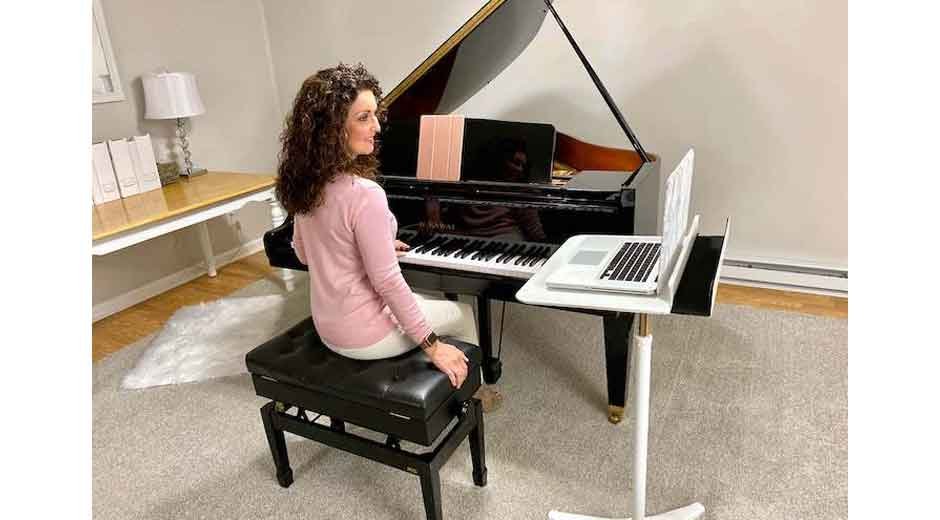
Learning to play the piano has long been a rewarding pursuit, offering emotional expression, mental stimulation, and personal accomplishment. However, for individuals who are home-bound or face mobility challenges, attending traditional in-person lessons can be physically and logistically difficult. Online piano lessons have opened new possibilities for these students, making high-quality instruction accessible without the need to leave home. With flexible learning schedules, virtual teacher guidance, and adaptive technology, piano education has become more inclusive than ever before. We will explore how online piano lessons empower students with mobility limitations, nurturing their creativity, independence, and musical growth in a comfortable environment.
How Online Piano Lessons Empower Accessibility and Growth
- Overcoming Physical and Environmental Barriers
One of the most significant advantages of online piano lessons in Pikesville is the elimination of physical barriers that often prevent mobility-limited students from accessing traditional music education. For many individuals, traveling to a music school involves navigating stairs, overcoming transportation challenges, or accessing spaces that are not equipped with accessibility features. Online lessons remove these obstacles entirely, allowing learners to participate from the comfort of their own homes. This accessibility not only conserves physical energy but also creates a consistent and stress-free learning environment.
Students can position their instruments, lighting, and technology in a way that best suits their comfort and physical needs. By learning in a familiar space, they feel more relaxed and focused, leading to improved progress and stronger retention of musical concepts. This level of comfort encourages continuity and helps foster a positive, long-term relationship with music.
- Personalized Learning That Adapts to the Student’s Pace
Online piano lessons offer a level of adaptability that is often difficult to achieve in traditional classrooms. Home-bound or mobility-limited students may require more flexible pacing or additional time to complete specific exercises. Online instruction enables individualized lesson plans, allowing teachers to adjust goals, modify hand techniques, and incorporate learning aids tailored to the student’s capabilities. V
ideo lessons can be recorded and replayed, allowing learners to revisit challenging sections as often as needed. This structure gives them autonomy over their progress and minimizes the pressure of keeping up with group lessons or travel schedules. Teachers can also integrate visual aids, adaptive keyboards, or touch-sensitive devices to help accommodate unique physical needs. Such customization ensures that every student—regardless of mobility level—can learn in a manner that supports comfort, confidence, and steady improvement without feeling limited by physical constraints.
- Building Emotional Well-Being and Mental Engagement
Music is not only a creative outlet but also a powerful emotional support tool, particularly for individuals who spend a significant amount of time at home. Online piano lessons offer home-bound learners a structured and engaging activity that stimulates cognitive functions while promoting emotional well-being. The process of learning new songs, reading sheet music, and mastering rhythms keeps the brain active and focused.
Moreover, regular lessons create a sense of accomplishment that can enhance self-esteem and reduce feelings of isolation. For many mobility-limited individuals, this sense of connection—to both their instructor and the art form itself—becomes an essential source of joy and motivation. Studies have shown that music learning enhances memory, coordination, and emotional resilience. By participating in consistent lessons from home, students can enjoy these benefits without the added strain of commuting, enabling them to maintain both mental and emotional balance through music.
- Leveraging Technology to Improve Accessibility
Modern technology plays a crucial role in making online piano lessons effective and inclusive. With video conferencing platforms, digital sheet music, and interactive piano apps, students can experience real-time guidance and visual demonstrations just as they would in a face-to-face setting. Teachers can share their screens, highlight musical notes, and observe students’ hand positioning to provide immediate feedback.
Additionally, adaptive technology—such as one-handed piano apps, accessible keyboards with customizable height or sensitivity, and online notation tools—has made piano learning more accessible for those with mobility impairments. Many students benefit from the ability to use headphones, adjust sound levels, or connect their digital pianos directly to learning software that tracks progress and offers instant feedback. These tools make practice sessions more engaging while ensuring that the student’s individual comfort and accessibility needs are prioritized. Technology not only bridges distance but also personalizes the musical experience to fit every learner’s abilities.
- Fostering Independence and Lifelong Learning
Online piano lessons help mobility-limited and home-bound students gain a sense of independence that goes beyond music education. By managing their schedules, accessing online learning materials, and practicing at their own convenience, they take ownership of their learning journey. This autonomy promotes self-discipline, time management, and perseverance—skills that carry over into other areas of life. Additionally, the online format encourages a lifelong learning mindset. Students can continue to advance their piano skills over time without worrying about transportation, accessibility, or physical barriers.
Many online programs offer a range of learning levels, from beginner to advanced, ensuring continuous learning and growth. As technology evolves, these lessons become increasingly interactive, enabling students to participate in virtual recitals or online music communities. Such engagement reinforces a sense of belonging and accomplishment, proving that physical limitations do not define one’s ability to create and share music. The result is empowerment through education and self-expression.
Online piano lessons have transformed how individuals with mobility limitations or home-bound lifestyles experience music education. Through accessible technology, personalized instruction, and virtual connection, these lessons break down physical barriers and open doors to creativity, confidence, and community. They empower learners to grow at their own pace while benefiting from the emotional, cognitive, and social rewards of music. For many, this approach is not simply an alternative—it is a path to independence and inclusion that makes music accessible to everyone, regardless of their circumstances.