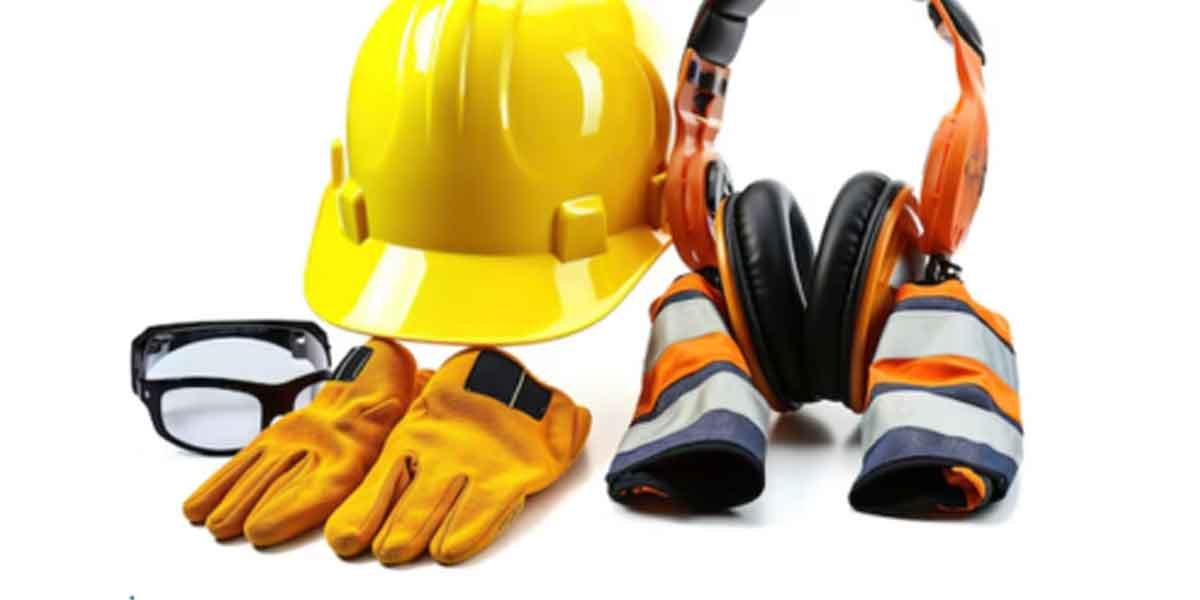
Depending on hard hats and respirators to shield personnel from airborne dangers is not a safety net. It is a risky gamble, and those sectors that continue to rely on PPE as the sole protection from dust and particulate contamination are relying on human infallibility, day in and day out.
The Hierarchy Of Controls Explains Why PPE Keeps Failing
The NIOSH Hierarchy of Controls provides a ranking of hazard control strategies in terms of efficacy and protective value. At the top of the hierarchy is elimination. Remove the hazard, and it can’t harm a worker. It’s that simple. If elimination isn’t possible, substitution can replace a dangerous substance or material with a less dangerous one. Engineering controls design hazards out of the workplace or build barriers between a worker and the hazard. Administrative controls, the second-least effective control strategy, change the way a worker interacts with a hazard.
Finally, and least effectively, there’s PPE. There’s a reason OSHA only allows PPE to be used when engineering, administrative, and work practice controls aren’t feasible or while other control strategies are being implemented. PPE is the last choice because it places a worker between a hazard and the world. A single, fragile layer of protection is all that stands between safety and danger.
Invisible Particles Are The Real Exposure Problem
The most harmful particulate matter, including PM2.5 – a fraction of the width of a human hair – and respirable dust below 10 microns, is invisible. This means workers can’t see it, don’t feel it, and don’t even know that it’s there. They often aren’t even aware that it’s harmful.
For all those reasons, behavioural controls are ineffective.
Standard or low-grade respiratory masks do not capture those sub-10 micron particles at the required efficiency (sub-10 micron particles represent the most harmful respirable fraction of the dust since they can penetrate deep within the lungs and even enter the bloodstream). This means that even if workers believe they are protected, they are not.
And then there is secondary exposure – the ambient dust created within a facility that enters the atmosphere and is inhaled by workers even when they are nowhere near the source of the dust.
A common example of this is a conveyor transfer point. Every time materials are moved at this location, material impact results in heavily increased particulate levels being vented into the atmosphere. That dust does not just remain at the source. It can be seen moving through the building.
Engineering Controls As The Primary Barrier
The direction modern industrial mining safety is moving is point-of-source capture – stopping the hazard where it’s created, rather than managing the fallout. That’s what becomes possible when dust control is an integrated part of a facility’s infrastructure, rather than an add-on requiring worker compliance and maintenance.
Automated dust suppression systems function by neutralizing airborne particles before they’re ever inhaled by a worker, precluding any need for workers to alter their habits. When suppression is added to the transfer points, stockpile areas, and crushing zones that are already causing dust to spread, an additional burden is neither added nor shifted to employees – it vanishes, creating a more comfortable work environment for everyone across the facility.
The Financial Argument For Going Beyond Compliance
Many people believe that high-quality suppression equipment represents a capital expense set against compliance obligations. That’s the wrong way to look at it – and it’s the more expensive route.
The cost of workplace-acquired respiratory illness includes workers compensation claims, litigation, insurance, investigation, and workforce attrition. These costs compound over time and are difficult to estimate; they’re a worse risk than a known capex.
Around 600,000 workers are exposed to silica dust in Australian workplaces every year (Safe Work Australia). This figure doesn’t represent 600,000 PPE shortfall cases. It represents the magnitude of a systemic fail. It occurs in an environment where the focus on engineering controls has been lacking. The illness acquired as a result – silicosis – is irreversible.
Organizations that invest in suppression infrastructure before regulatory pressure do so with less long-term risk, better workforce retention, lower incident management costs, and less disruption to operations.
What A Proactive Safety Culture Actually Looks Like
The distinguishing factor between a reactive and proactive safety culture can be revealed by asking a simple question: when a dust hazard is identified, is the immediate response to purchase more masks or to investigate the source of dust emission?
A proactive safety program treats fugitive dust monitoring as an operational measure and not solely as an obligation for regulatory compliance. It views engineering controls as the principal approach, while personal protective equipment (PPE) serves as a last resort for residual risk. Workers who are not even required to wear respiratory protective gear, such as cleaners, maintenance personnel, and supervisors, are also protected, since they are breathing the same contaminated air.
Personal protective equipment has its place in an overall safety strategy. It just should not be the basis of it. When PPE becomes the basis of a safety strategy on an industrial site, you can be sure that the bill for that liability is not far behind – but the workers breathing that contaminated air are the first ones paying the price.