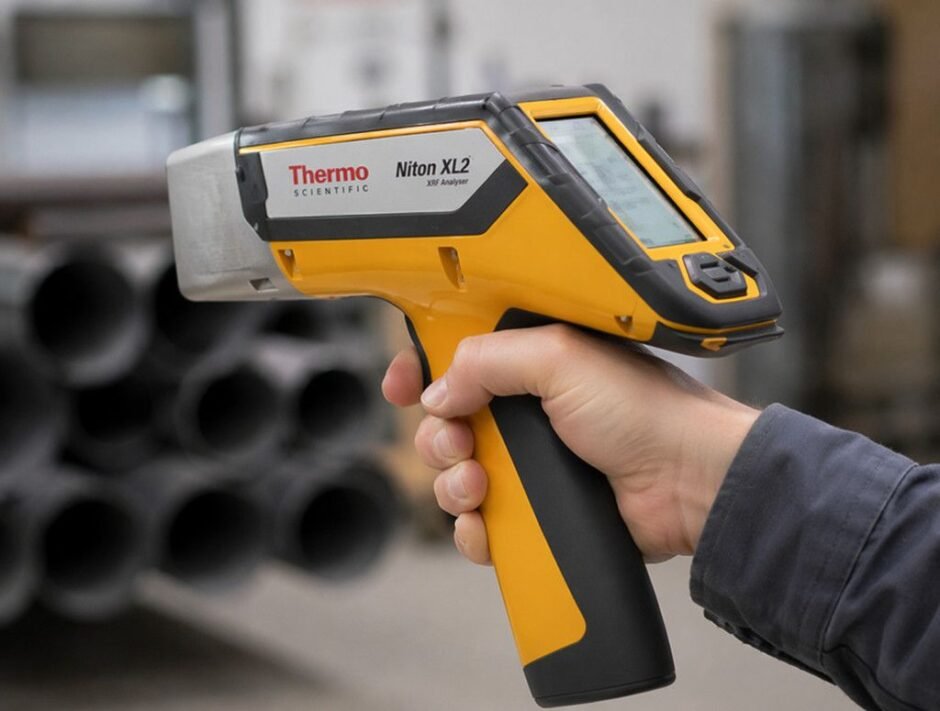
A handheld XRF analyzer is not ordinary used equipment. It is a specialized field instrument. A fast sale depends on clear facts: brand, exact model, serial number, condition, installed modes, accessories, service records, and whether the unit powers on.
Buyers care because XRF analyzers serve specific jobs. Thermo Fisher describes Niton analyzers as tools for positive material identification and alloy identification in industrial settings. Bruker describes handheld XRF as useful for scrap metal sorting, including ferrous and non-ferrous scrap. EPA Method 6200 covers field-portable XRF use for soil and sediment screening. HUD performance characteristic sheets matter for lead-paint XRF use and calibration checks.
The fastest way to sell is to remove doubt. Do not make a buyer guess what you have. Show the analyzer, the label, the detector window, the accessories, and the proof that it starts. Then the buyer can move from basic questions to a real offer.
Start With the Exact Brand, Model, and Serial Number
The first detail a buyer needs is the exact model. “XRF gun” is too vague. A Thermo Niton XL2 is not the same as a Niton XL3t-980 GOLDD+, Niton XL5, Olympus Vanta, Bruker S1 TITAN, SciAps X-550, or Hitachi X-MET8000. Each model may carry different demand, software, accessories, and resale value.
Put the brand and model in the first line of your message. Then add the serial number, year of manufacture if you know it, and any installed modes or calibrations. Useful modes may include alloy, PMI, soil, mining, lead paint, RoHS, plastics, geochem, and precious metals. If you are not sure which modes are installed, do not guess. Take clear photos of the software screens and say that the modes need to be confirmed.
This matters because buyers shop by use. A metal buyer may need alloy verification. A recycler may need scrap sorting. An environmental buyer may care about soil screening. A lead-paint buyer may ask for documentation and calibration records. HUD’s performance characteristic sheet for the SciAps X-550 Pb says calibration should be checked against a NIST standard reference material before testing proceeds.
A clear model name moves the sale forward. It changes the conversation from “What do you have?” to “What is this unit worth?”
Send Photos That Answer the Buyer’s Questions
Good photos speed up a sale. They show condition without a long explanation. Bad photos slow it down. A blurry case photo does not show whether the analyzer works, whether the detector window is clean, or whether the charger is included.
Start with one photo of the full package. Lay out the analyzer, hard case, batteries, charger, dock, cables, holster, test stand, calibration standards, manuals, and accessories. Then send close-ups of the unit itself.
Show the model label and serial number, detector window, screen, trigger and handle, ports, charger connection, and battery compartment. If the analyzer has cracks, dents, missing parts, worn labels, or screen damage, show those too. Hiding damage wastes time. It also makes the buyer less confident in the rest of the description.
A power-on photo helps. A sample reading photo helps more. It shows that the analyzer starts, the screen works, and the software can be reached. If the unit shows an error, locked software, a weak battery, or an unreadable screen, include that information.
Pair the photos with short notes: “powers on,” “battery holds charge,” “charger included,” “case included,” “calibration records available,” or “detector window shown in photo.” These details reduce follow-up questions and help the buyer evaluate the unit faster.
Know What Makes a Used XRF Analyzer More Valuable
A used XRF analyzer sells faster when the buyer can see why it still has practical value. Brand matters, but condition and completeness matter too. A clean, working analyzer with the right modes, batteries, charger, case, and records is easier to evaluate than a loose unit with no accessories and no history.
High-value factors include working condition, a desirable brand, a newer generation, SDD detector, light-element capability, a clean detector window, installed modes, and service or calibration documentation. Accessories also help. Multiple batteries, a charger, dock, test stand, hard case, calibration standards, and manuals can make the package more useful to the next owner.
Value drops when the buyer sees risk. Common problems include a cracked screen, damaged detector window, dead batteries, missing charger, locked software, unknown calibration, missing case, and unclear ownership history. Older radioactive isotope units may also complicate resale because licensing and source handling can matter.
Do not set your expected price from one marketplace listing. Public listings vary widely and may include incomplete, questionable, or overseas offers. Treat them as rough market signals, not proof of value. A serious buyer will look at the unit in front of them: exact model, configuration, condition, accessories, records, and resale risk.
List the Brands Buyers Commonly Look For
Some XRF brands are easier to recognize and evaluate because they are widely used in industrial, environmental, recycling, and inspection work. If your analyzer belongs to one of these product families, name it clearly.
Thermo Scientific Niton models are common in the used market. The Niton XL2 spec sheet describes precise alloy analysis, near-instant results, ease of use for non-technical personnel, rugged industrial design, integrated camera, and non-destructive testing. The Niton XL5 Plus spec sheet lists a compact unit weighing 2.8 lb / 1.3 kg. Model names to include are Niton XL2, XL2 800, XL2 980 GOLDD, XL3t, XL3t GOLDD+, XL5, XL5 Plus, and DXL.
Olympus / Evident Vanta analyzers are also important. Evident describes Vanta units as rugged portable tools for rapid elemental analysis and alloy identification. Vanta specifications list models weighing about 1.71–1.9 kg with battery, depending on the model. Useful names include Vanta M, Vanta C, Vanta L, Element, Element-S, Vanta Core, and Vanta Max.
Other strong product families include Bruker S1 TITAN, SciAps X-Series, and Hitachi X-MET8000. Bruker lists the S1 TITAN at 1.7 kg / 3.7 lb with battery. SciAps lists the X-550 at 2.98 lb / 1.35 kg with battery. Hitachi’s X-MET8000 line includes Smart, Optimum, Expert, and Expert Geo.
Prepare the Details That Speed Up a Quote
A fast sale depends on a fast evaluation. The buyer needs enough information to judge the analyzer without chasing basic facts. Before you contact a buyer, gather the core details in one place.
Include:
- Brand and exact model
- Serial number
- Year of manufacture, if known
- Installed modes or calibrations
- Condition
- Battery condition
- Accessories included
- Calibration or service records
- Clear photos
- Whether it powers on and reads a sample
This is where many sellers lose time. They send one photo and ask, “What is it worth?” The buyer then has to ask for the model, serial number, accessories, power status, and records. Each missing detail adds another message and another delay.
A better message is simple: “Thermo Niton XL3t-980 GOLDD+, powers on, two batteries, charger, case, dock, manuals, alloy mode installed, service records available, detector window shown in photos.” That gives the buyer something real to evaluate.
The point is not to make the unit sound better than it is. The point is to make it easy to understand.
Be Clear About Safety, Batteries, and Shipping
An XRF analyzer is a field instrument, but it still needs proper handling. Handheld XRF units emit ionizing radiation when operating. Thermo Fisher says portable XRF analyzers are designed to be safe when used according to the manufacturer’s instructions, and operators should know the user manual. OSHA says a radiation protection program is a best practice for protecting workers from ionizing radiation.
Shipping also matters. Many handheld analyzers use lithium batteries. PHMSA states that lithium batteries are regulated as hazardous materials when transported in commerce by air, highway, rail, or water. UPS guidance says batteries should be packed to prevent short circuits and damage. It also says packages with lithium batteries packed with equipment must meet handling requirements, including drop-test guidance.
Do not improvise with packaging. Use the hard case if you have it. Protect the detector window, screen, handle, and trigger. Keep batteries secure. If the buyer provides shipping instructions, follow them. If you are unsure whether to include batteries, ask before shipping.
A safe shipment protects the analyzer and the deal. The unit should arrive in the condition you described, with the accessories you listed and the records you promised.
Why Selling Direct Can Be Faster Than Listing It Yourself
You can list a used XRF analyzer on a public marketplace, but speed is not guaranteed. You may get low offers, vague questions, overseas inquiries, return risk, or buyers who do not understand the equipment. A specialized buyer looks at the details that matter: model, condition, modes, records, accessories, and resale path.
Direct selling also avoids the work of explaining a technical instrument to a general audience. You do not need to write a long listing, answer the same questions repeatedly, or wait for the right buyer to appear. You prepare the facts, send the photos, and get a decision.
This is where a direct buyer such as UCG HDD can make sense. The process is simple:
- Describe the analyzer — send the brand, exact model, serial number, condition, installed modes, and accessories.
- Share clear photos — include the label, detector window, screen, charger, batteries, case, and any service records.
- Ship the unit for evaluation — pack it carefully and follow the buyer’s shipping instructions.
- Review the offer — accept it if the number works, or have the unit returned if it does not.
To start that process, use the sell xrf analyzer page.
That does not mean every analyzer sells for the same price. A clean Niton, Vanta, Bruker, SciAps, or Hitachi unit with records and accessories is different from a damaged unit with missing parts. But a direct process can be faster because the buyer already knows how to evaluate the tool.
Idle tools tie up money. If the analyzer is no longer part of your work, the practical question is not what it cost years ago. The question is what it is worth now, in its current condition, with the accessories and records you still have.
Fast-Sale Checklist
| What to prepare | Why it matters |
| Brand and exact model | Identifies the unit and product family |
| Serial number | Helps verify the analyzer |
| Photos of full package | Shows what is included |
| Detector window close-up | Shows a key condition point |
| Power-on photo | Confirms the unit starts |
| Sample reading photo | Shows basic function |
| Installed modes | Helps match the unit to buyer demand |
| Batteries and charger | Affects usefulness and resale value |
| Case and accessories | Makes the package more complete |
| Service or calibration records | Reduces buyer risk |
| Honest damage notes | Prevents delays and disputes |
FAQ
How fast can I sell an XRF analyzer?
The fastest path is to send a complete description in the first message. Include the brand, exact model, serial number, photos, installed modes, accessories, power status, and service records. A buyer can move faster when they do not have to ask basic questions.
A vague message slows the process. “I have an XRF gun” does not show what the analyzer is, what it includes, or whether it works. A clear message does. If the unit powers on, show it. If it reads a sample, show the screen. If the detector window is clean, include a close-up. If something is damaged or missing, say that too.
A fast sale does not come from hiding problems. It comes from reducing uncertainty. The buyer needs to know whether the analyzer can be used, repaired, resold, or evaluated for parts. Complete information makes a serious offer easier.
What XRF analyzer brands are easiest to sell?
The strongest product families from the research are Thermo Scientific Niton, Olympus / Evident Vanta, Bruker S1 TITAN, SciAps X-Series, and Hitachi X-MET8000. These names appear across industrial, scrap, alloy, environmental, and inspection use cases.
For Niton, useful model names include XL2, XL2 800, XL2 980 GOLDD, XL3t, XL3t GOLDD+, XL5, and XL5 Plus. For Evident and Olympus, buyers often recognize Vanta M, Vanta C, Vanta L, Vanta Element, Vanta Core, and Vanta Max. For Bruker, the S1 TITAN line is important. SciAps models include X-200, X-250, X-505, and X-550. Hitachi models include X-MET8000 Smart, Optimum, Expert, and Expert Geo.
Exact naming matters. Do not shorten the model if the label gives a fuller version. A few extra characters can change the buyer’s understanding of the analyzer.
What affects the value of my used XRF analyzer?
Value depends on the model, age, condition, detector, installed modes, accessories, calibration records, batteries, charger, and case. A complete working unit is easier to evaluate than a loose analyzer with no charger and no history.
A clean detector window helps. So do clear service records, multiple batteries, a dock, test stand, manuals, calibration standards, and a hard case. Installed modes can also affect demand because buyers shop for specific uses such as alloy verification, PMI, soil screening, lead paint testing, and precious metals.
Damage lowers value because it adds risk. A cracked screen, dead battery, missing charger, locked software, damaged detector window, or unknown calibration can all slow the sale. The best approach is to disclose the problem and show it clearly. Serious buyers can evaluate imperfect units, but they need accurate information.
Can I sell a broken or incomplete XRF analyzer?
Possibly. A damaged or incomplete analyzer may still have value, but it depends on the brand, model, missing parts, and type of damage. A unit with a dead battery is different from one with a damaged detector window. A missing charger is different from locked software. A cracked screen is different from a unit that will not power on at all.
Send photos to UCG HDD and describe the problem plainly. Include what is missing and what still works. If it powers on, say so. If it does not, say that. If you do not know the issue, avoid guessing. “Unknown problem” is better than a wrong diagnosis.
Accessories still matter. A non-working analyzer with its case, charger, dock, batteries, manuals, and calibration standards may be easier to evaluate than a bare unit. The buyer can see the full package and judge whether repair, resale, or parts value makes sense.
What should I send for the fastest quote?
Send one clear message with the essentials: brand, model, serial number, condition, installed modes, accessories, power status, battery condition, and service records. Attach photos of the analyzer, label, detector window, screen, case, charger, batteries, and anything else included.
Do not wait for the buyer to ask for the obvious items. The faster you provide them, the faster the buyer can respond. If you have calibration paperwork, include a photo or scan. If you have manuals or standards, show them in the accessory photo. If the analyzer has software restrictions, passwords, or errors, mention them early.
The rule is simple: make the analyzer easy to identify, easy to inspect, and easy to evaluate.
Final Takeaway
Selling an XRF analyzer fast is mostly preparation. Know the exact model. Show the condition. List the modes. Include the accessories. Be honest about damage. Provide records when you have them.
A handheld XRF analyzer has resale value because it helps buyers do real work: alloy identification, PMI, scrap sorting, soil screening, lead paint testing, and other field analysis. Buyers move faster when they can see what they are buying.
Clear facts sell faster than big claims.