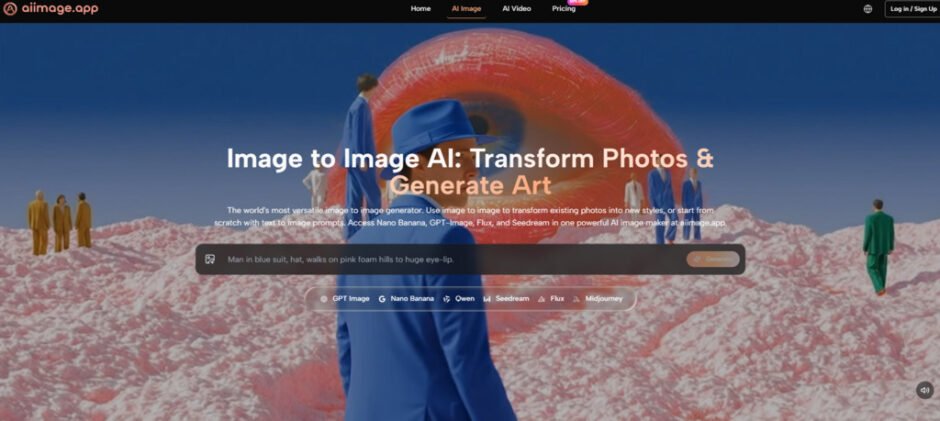
The moment I realized I had bookmarked over twenty AI image websites, I knew I needed a decision framework. Creators today face an embarrassment of riches: every platform claims to generate photorealistic portraits, dreamlike landscapes, and pixel‑perfect logos, all from a text prompt. But the difference between a demo that stuns and a tool that supports a real visual workflow is rarely captured by a single screenshot. I decided to stop chasing the best single image and instead built a five‑dimension scorecard to evaluate these tools as whole systems. I tested each platform against the same briefs, tracked the results, and arrived at a conclusion that surprised me: the most impressive tool wasn’t the one with the highest score in any one category, but the one that avoided the lowest scores across the board. And in that quiet, across‑the‑board strength, an AI Image Maker I’d initially overlooked ended up on top.
The framework emerged from frustration. I’d been using Midjourney for moody concept art and Adobe Firefly for clean commercial assets, but switching between them fractured my workflow. I wanted to know: if I could only keep one tool for the next year, which would give me the fewest headaches? I settled on five dimensions—Image Quality, Generation Speed, Ad Distraction, Update Activity, and Interface Cleanliness—and gave each a weight in my head, though the scorecard itself presents raw scores. Image Quality mattered, but not if the tool was so slow or ad‑cluttered that I dreaded opening it. Speed mattered, but not if the interface forced me to decipher icon‑only navigation. I needed to see the whole picture.
I selected six platforms that represent different philosophies: ToImage AI (multi‑model aggregator), Midjourney (artistic powerhouse), DALL‑E via ChatGPT (conversational generator), Leonardo AI (fine‑tuning for game assets and textures), Adobe Firefly (commercial‑safe, Adobe‑integrated), and Ideogram (known for text‑rendering accuracy). Over three weeks, I ran each through a series of tasks—a product mockup, a character design, a text‑heavy poster, and a set of ten variant icons—and recorded not only the best output but the total time, clicks, and mental energy required.
I quickly saw that the platforms split into two camps: single‑strength stars that excelled in one dimension but faltered in others, and balanced generalists that never dazzled but never disappointed. Midjourney produced the most visually arresting images—a 9.5 in Image Quality—but its speed was inconsistent and the interface, still partly Discord‑bound, felt like a relic compared to the web‑native tools. DALL‑E was snappy and remarkably accurate with long prompts, yet its update cadence seemed slow, and I occasionally hit content policy rejections on innocuous queries. Adobe Firefly offered gorgeous integration with Creative Cloud, but generation speed lagged and the constant credit‑metering introduced a low‑level stress. Leonardo AI’s strength in textures and game assets was genuine, but the interface was dense with tool‑specific jargon, and upsell prompts were frequent.
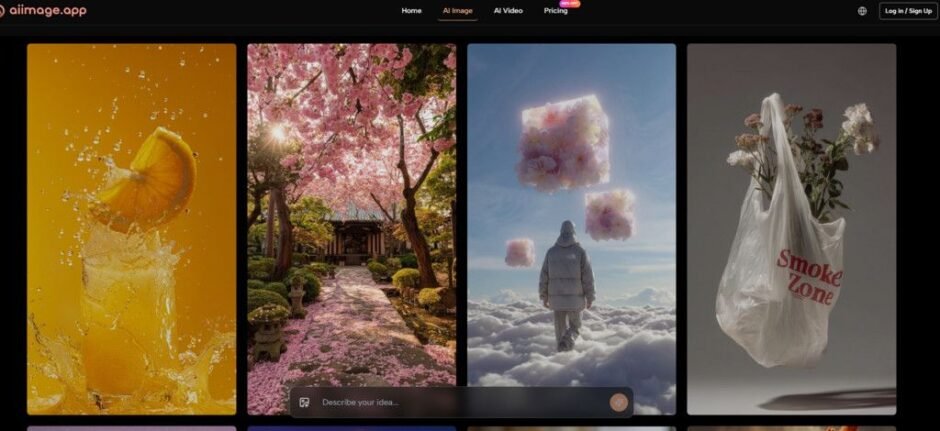
Then I spent a week with ToImage AI, which I had initially pegged as a “jack of all trades” aggregator. I was wrong about what that means. It wasn’t that it did everything; it’s that it let me move between tasks without recalibrating my expectations. I could generate a photorealistic product shot using one model, then switch to GPT Image 2 for a structured infographic‑style image, all within the same clean tab. That model‑switching capability, when combined with an interface that prioritized the canvas over cross‑sell banners, made the tool feel less like a gallery of cool demos and more like a workbench.
The Five‑Dimension Scorecard in Practice
To make sense of the data, I scored each tool out of 10 across the five dimensions, then calculated an overall score that didn’t weight any single factor. The purpose was to surface which platform would be the most dependable for a wide range of visual tasks, not which one could produce the single most stunning artwork.
| Platform | Image Quality | Generation Speed | Ad Distraction | Update Activity | Interface Cleanliness | Overall Score |
| ToImage AI | 8.3 | 8.2 | 9.5 | 9.0 | 9.2 | 8.8 |
| Midjourney | 9.5 | 7.8 | 9.0 | 7.0 | 7.5 | 8.2 |
| DALL‑E (via ChatGPT) | 8.7 | 8.6 | 9.2 | 7.5 | 8.5 | 8.5 |
| Leonardo AI | 8.1 | 7.5 | 6.5 | 8.2 | 6.8 | 7.4 |
| Adobe Firefly | 8.8 | 7.0 | 8.0 | 8.5 | 7.8 | 8.0 |
| Ideogram | 8.4 | 8.0 | 7.0 | 7.3 | 8.3 | 7.8 |
The table tells a clear story. Midjourney wins on Image Quality, DALL‑E on Speed, but ToImage AI leads overall because it avoids the low scores that drag the others down. Its Ad Distraction score of 9.5 means I was never interrupted; its Interface Cleanliness of 9.2 meant I could find what I needed without a tutorial. In a multi‑month usage scenario, those dimensions translate directly into time saved and fewer abandoned sessions.
Why a Balanced Tool Wins for Visual Creators
A photographer might need only the most photorealistic engine and will happily endure a clunky interface. An illustrator might favor stylization over speed. But for the generalist visual creator—someone who designs presentation decks on Monday, social assets on Wednesday, and concept sketches on Friday—the tool must perform well in all dimensions simultaneously. A single low score becomes a daily irritant. If Image Quality is excellent but Generation Speed is poor, you end up staring at loading spinners during crunch time. If Interface Cleanliness is low, you waste mental energy navigating instead of creating. ToImage AI’s balanced profile meant I could stay in a creative flow state across varied briefs, which is the real metric that matters when deadlines loom.
Model Switching as a Workflow Accelerator
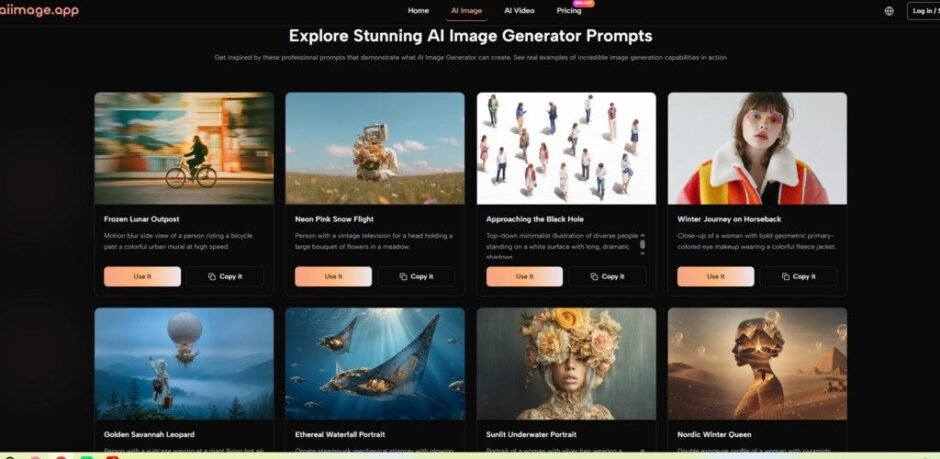
One feature that quietly amplified ToImage AI’s overall score was its model‑switching design. When I needed a clean product shot, I selected a model optimized for commercial realism. When I needed a stylized background for a quote card, I picked a different model. I didn’t have to log into a separate platform, relearn prompt syntax, or adjust to a new interface. That fluidity made the tool feel like a Swiss Army knife that actually fit in my pocket—every blade was accessible, but none stabbed me when I reached for it. The GPT Image 2 model, in particular, helped with structured layouts where I needed to position objects with some intentionality, and it consistently returned compositions that felt like a human designer had at least rough‑framed them.
Where the Scorecard Approach Falls Short
No numeric scorecard can fully capture emotional response or artistic serendipity. There were days when I opened Midjourney specifically because I wanted the thrill of an unexpected, painterly output that might spark a new idea. The scorecard doesn’t measure delight, and that’s a real limitation. It also doesn’t fully account for ecosystem lock‑in: if your entire team already uses Adobe products, Firefly’s integration might outweigh a lower overall score. My framework is a decision aid, not a final verdict.
The Creators Who Should Use This Framework
If you find yourself bouncing between three different image tools and feeling guilty about every subscription, this kind of multi‑dimensional evaluation can bring clarity. Rank the dimensions according to your own priorities—maybe Generation Speed matters more to you than Update Activity—and then test the top contenders. For me, ToImage AI emerged as the rational choice because it refused to be terrible at anything, and that consistent competence made it the tool I trusted when I couldn’t afford a bad generation day. The site indicates full commercial rights and no watermarks on generated images, which also eased my mind when using outputs in client work.
In a market that loves to celebrate extremes—the sharpest realism, the wildest stylization—it’s easy to forget that most creative work lives in the middle. I didn’t need the best image I’d ever seen; I needed a tool that would reliably produce a good one, every time, without asking me to fight for it. The five‑dimension scorecard showed me that the winner isn’t always the loudest voice in the room; sometimes it’s the one you barely notice because it’s doing its job so quietly.