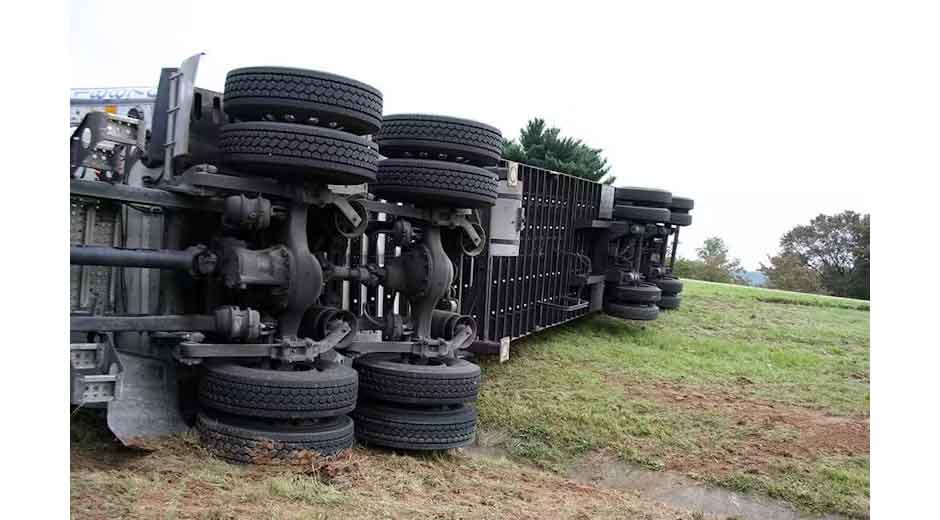
When a sedan hits another sedan, it’s bad. When an 18-wheeler hits a sedan, it’s catastrophic. The difference isn’t just dramatic—it’s rooted in basic physics, federal regulations, and the sheer complexity of what happens when 80,000 pounds of steel meets 3,000 pounds of passenger vehicle. Understanding why these crashes are so much worse helps explain why the aftermath looks completely different from a typical fender bender.
The Physics Problem Nobody Talks About
Here’s the thing: mass matters. A fully loaded commercial truck can weigh up to 80,000 pounds legally. That’s about 20 times heavier than the average car. When that kind of weight is moving at highway speeds, the force generated during a collision is absolutely devastating.
But it’s not just about weight. Trucks sit higher off the ground, which creates what’s called an “override” situation. The truck’s bumper and frame can ride right over a car’s protective structure, bypassing all the crumple zones and safety features that engineers designed to protect passengers. This is where things get really dangerous—the passenger compartment gets crushed instead of the front or rear of the vehicle absorbing the impact.
Stopping distance is another massive factor. A passenger car traveling at 65 mph needs about 300 feet to come to a complete stop under ideal conditions. That same 18-wheeler? It needs nearly 525 feet. When a truck driver realizes something’s wrong, they simply can’t stop in time, even if they do everything right. Add in rain, worn brakes, or an overloaded trailer, and that stopping distance grows even longer.
The Injury Patterns Are Completely Different
People who get hit by regular cars often walk away with whiplash, maybe some bruising, possibly a broken bone. People who survive crashes with commercial trucks face a different reality entirely. Traumatic brain injuries are common because of the violent force involved. Spinal cord damage happens frequently. Multiple fractures, internal organ damage, and severe burns from fuel spills—these aren’t rare complications, they’re typical outcomes.
The medical costs reflect this difference. Where a car accident might result in a few thousand dollars in emergency room bills and physical therapy, truck accident victims often face months in the hospital, multiple surgeries, and rehabilitation that can stretch on for years. Some never fully recover. Many can’t return to their previous jobs, if they can work at all.
When someone’s been seriously hurt in one of these crashes, getting experienced legal help becomes critical. For those dealing with 18 wheeler truck accidents East Texas, connecting with attorneys who understand the specific challenges of commercial vehicle cases can make a real difference in how the case unfolds and what kind of compensation becomes possible.
Multiple Parties Mean Multiple Problems
This is where truck accident cases get legally complicated. In a regular car crash, you’re usually dealing with two drivers and two insurance companies. With an 18-wheeler, the list of potentially responsible parties gets long fast.
There’s the driver, obviously. But there’s also the trucking company that employed them. The company that owns the trailer (sometimes different from who owns the cab). The business that loaded the cargo. The maintenance contractor who last worked on the brakes. The manufacturer if there’s a mechanical defect. Each one of these parties has their own insurance company, their own lawyers, and their own reasons to claim someone else is responsible.
Trucking companies carry insurance policies that start at $750,000 and often go much higher—sometimes into the millions for hazardous cargo. That sounds like a good thing until you realize it means these companies have serious financial incentive to fight claims hard. They’ve got entire legal teams whose job is to minimize payouts.
The Federal Regulation Maze
Commercial trucks don’t just follow state traffic laws—they’re governed by a whole separate set of federal regulations called the Federal Motor Carrier Safety Regulations. These rules cover everything from how many hours a driver can be on the road to how often brakes need inspection to what kind of training drivers must complete.
When a crash happens, investigators have to dig through logbooks, electronic logging device data, maintenance records, driver qualification files, and cargo documentation. Black box data from the truck can show speed, braking patterns, and whether the driver was following hours-of-service rules. Sometimes what looks like a simple accident turns out to involve systematic violations—a company pushing drivers to skip breaks, falsified inspection reports, or improperly secured cargo.
The problem is that evidence disappears fast. Trucking companies know what records matter in lawsuits, and federal law only requires them to keep certain documents for limited periods. The metal gets scrapped, the black box data gets overwritten, and suddenly proving what happened becomes much harder.
Why Insurance Companies Act So Differently
After a regular car accident, an insurance adjuster might call within a few days with a settlement offer. It might be low, but at least the process is straightforward. After a truck accident, insurance companies often deploy investigation teams immediately—not to help victims, but to build their defense.
These adjusters show up at accident scenes with cameras. They take statements from anyone who’ll talk. They look for any possible way to shift blame onto the victim or minimize the trucking company’s liability. And because the potential payouts are so much higher, they fight much harder and longer.
Early settlement offers in truck cases are notoriously inadequate. An insurance company might offer $50,000 when someone’s medical bills alone will hit $300,000. They’re betting that victims don’t understand the full scope of their injuries yet or that financial pressure will force them to accept whatever’s offered.
The Long-Term Reality
Here’s what most people don’t realize until it happens to them: car accident injuries usually heal. Someone might deal with a sore neck for a few weeks, go to physical therapy for a month or two, and then get back to their normal life. Truck accidents don’t work that way. The survivors often face changes that don’t go away. Chronic pain that wakes them up at night. Brain injuries that leave them struggling with memory or focus years later. Limbs that are just gone.
When attorneys start figuring out what a case is worth, they can’t just add up the current medical bills and missed paychecks. They have to think about what the next thirty or forty years look like. Can this person still work in their field? Will they need someone to help them at home? Does their house need ramps or a modified bathroom? What about the mental health treatment for the trauma of going through something this awful? Get these numbers wrong at the beginning, and someone could be left trying to survive on a settlement that runs out when they still have decades of expenses ahead.
The gap between a typical car crash and getting hit by a commercial truck isn’t small—it’s enormous. The force is more violent. The injuries cut deeper and last longer. The legal questions multiply. And what’s at stake for the victim and their family is so much bigger. That’s why these cases need people who’ve handled them before, who know what questions to ask and what evidence matters. Treating an 18-wheeler crash like any other accident is a mistake that can cost someone everything they need to rebuild their life.