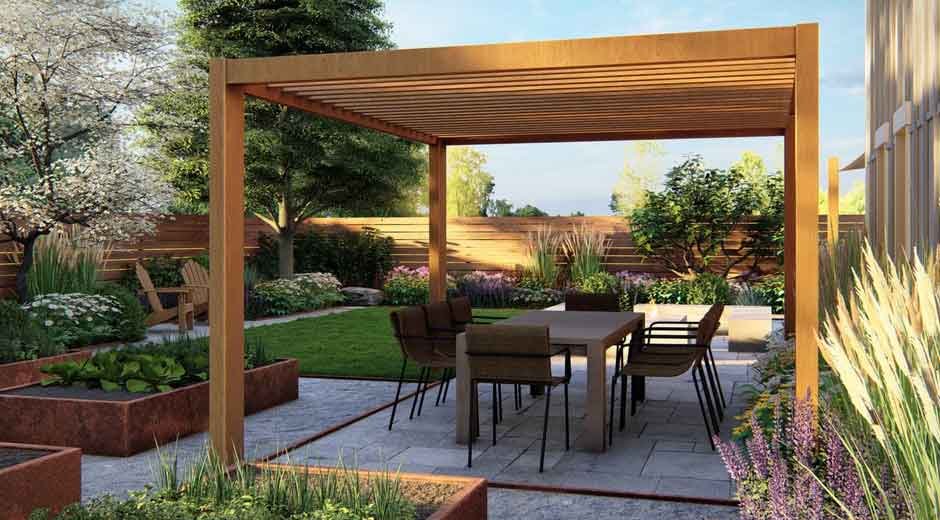
Backyards are often treated as something to look at rather than live in. Lawns are trimmed, furniture is arranged, and everything is kept neat, yet the space itself can end up feeling oddly unused. This happens when outdoor areas are designed purely for appearance, rarely inviting people to explore and engage.
A more intentional approach asks a different question: how do we want this space to feel when we’re in it? For many families, the answer includes movement, creativity, and the freedom to use the backyard as an extension of everyday life instead of a separate zone used for special occasions.
But how is this achieved? Here’s what you need to know.
Design for Movement, Not Just Moments
Movement doesn’t always have to be structured or purposeful. In fact, the most natural forms of movement often happen when nobody is paying much attention to them at all, and a well-designed backyard encourages this by making activity feel effortless rather than planned.
Open sightlines, clear pathways, and flexible zones allow movement by letting people drift from one part of the space to another. Kids move instinctively, adults follow more casually, and the backyard becomes a place where motion feels welcome, not disruptive. When movement is built into the design, it becomes part of the overall atmosphere instead of something that needs to be scheduled.
Creativity Thrives in Flexible Spaces
Creative outdoor spaces often eschew rigid definitions, instead offering areas that serve multiple purposes and invite interpretation. A patch of lawn can become a stage, a racetrack, or a quiet place to lie down and watch the sky. Likewise, equipment and furniture that feel adaptable rather than fixed invite imagination to do the rest.
This is where thoughtful choices matter. Items that balance form and function can support creative play without overwhelming the visual calm of the space. And, when play elements feel intentional rather than tacked onto, they blend into the overall design instead of competing with it.
Quality Over Quantity
Choosing fewer, better-made pieces often creates a greater impact than filling a backyard with numerous features. Not to mention, high-quality outdoor elements tend to age better, both visually and practically, and they’re more likely to stay in use over time.
This philosophy also extends to play equipment. Rather than hiding it away or treating it as temporary, it’s often better to choose pieces that are designed to complement the space.
Take premium trampolines by Vuly as an example, which aren’t only an excellent choice for their intended purpose (we’re inviting movement and creativity, after all), but they sit nicely within a designed backyard, blending style, durability, and longevity.
Inviting All Ages into the Space
On the subject of play equipment, one of the most overlooked aspects of backyard design is how it brings different ages together. Spaces that work only for children or only for adults tend to fragment family time, so bringing a more creative approach to things and considering how everyone might use the space at different times of the day is always a good idea.
Movement as a Creative Outlet
Movement itself can be a form of creative expression. Jumping, running, climbing, and balancing all involve problem-solving and experimentation. When kids are allowed to move freely through a space, they’re constantly responding to their surroundings, imagining and inventing as they go.
Design that allows for this kind of physical creativity doesn’t need to be loud or busy, though. In fact, simpler environments often inspire more engagement, and neutral palettes, natural materials, and uncluttered layouts leave room for movement to become the focal point.
Backyards That Evolve Over Time
The most successful outdoor spaces are rarely finished, and that’s a good thing. These spaces change as families grow, interests shift, and routines settle into new patterns. Designing with flexibility in mind allows a backyard to evolve without the need for constant redesign.
This long-term perspective is where intentional choices really pay off. Elements that continue to feel relevant year after year help the space mature gracefully, rather than needing to be replaced or rethought every season.
Use vs Perfection
Ultimately, a backyard that invites movement and creativity is one that is meant to be used. Grass gets worn in places, furniture shifts, and the space reflects real life rather than an idealized version of it. Movement happens naturally when outdoor design prioritizes use over appearance, and the backyard becomes a place people are drawn to, not because it looks perfect, but because it feels right.