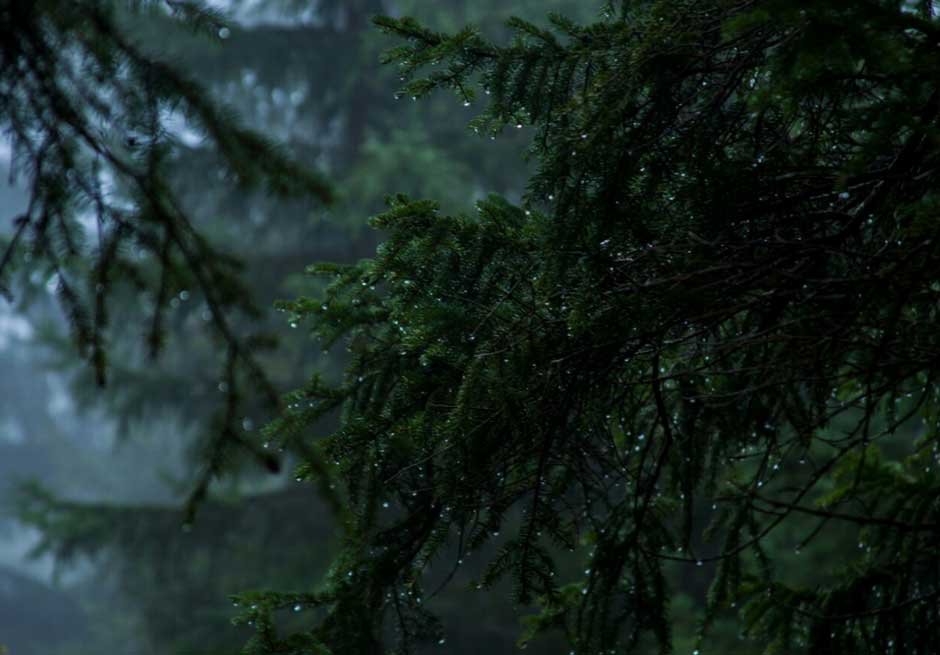
When you’re seeing a dramatic downpour in your favorite movie, you’re witnessing a carefully orchestrated illusion. From the torrential storms in Blade Runner 2049 to the cliche rain scenes in romantic comedies, filmmakers have spent nearly a century perfecting the art of artificial weather.
The evolution of rain effects in cinema
Hollywood professionals have been creating rain effects for nearly a century. They use a mixture of highly adaptable methods that can be scaled for any production size. What many people don’t realize is that there’s actually no such thing as an off-the-shelf portable rain machine. Instead, film crews rely on some fairly sophisticated water delivery systems that can be customized. This helps them be more evergreen as specific shots vary.
The modern approach involves much more than simply spraying water from above. Professional water trucks used for film production come equipped with 4,000-gallon tanks, six-wheel drive systems. They weaponize remote-controlled pumps, high-pressure hydraulic spray head pumps, and front and side water cannons with six variable spray heads. These specialized vehicles are often nicknamed The Rainmaker and essentially follow the crew around to different settings to keep weather continuity.
The technical infrastructure behind the scenes
Creating convincing rain isn’t as easy as you think. It requires precise control over water pressure and distribution, but also timing. Professional rain systems can create everything from a light drizzle to a heavy shower or monsoon, of course it depends on the budget constraints. For more challenging shoots, companies use truck-mounted mini bowsers that are useful for remote locations where water supply is scarce.
The complexity becomes even more apparent in underwater scenes. For major film studios needing to simulate CGI figures moving through water without visible equipment, specialized submersible pumps with dual discharge points are deployed, with scuba divers operating lasso-like controls underwater to provide exact effects during the more fast-paced shoots.
Behind many of these operations, particularly smaller art house films with lower budgets, a reliable water pressure pump was installed to keep consistent flow rates and pressure levels. These pumps, which are the same as what’s used in residential and commercial applications, form the backbone of water delivery systems that must perform flawlessly. In other words, they’re the engine to get water from one place to another, not the end-distribution.
From studio backlots to remote locations
The versatility of modern rain systems is why productions can choose to shoot anywhere without regard for the weather. Well, that’s not completely true, as they often want to avoid rain even if they want rain (because they want to be in control of it). But, with Spiderman filming in Glasgow the other day, which is one of Europe’s rainiest cities, it’s clearly not a complete deterrent.
Specialist atmospheric companies can provide everything from 200+ meters of background fog to rain and wind solutions that create either a summer shower or a winter 60mph storm.
The key to realistic rain effects lies in having the right type of rainhead, which is essentially the size of the droplets. Every drop has been carefully calculated.